


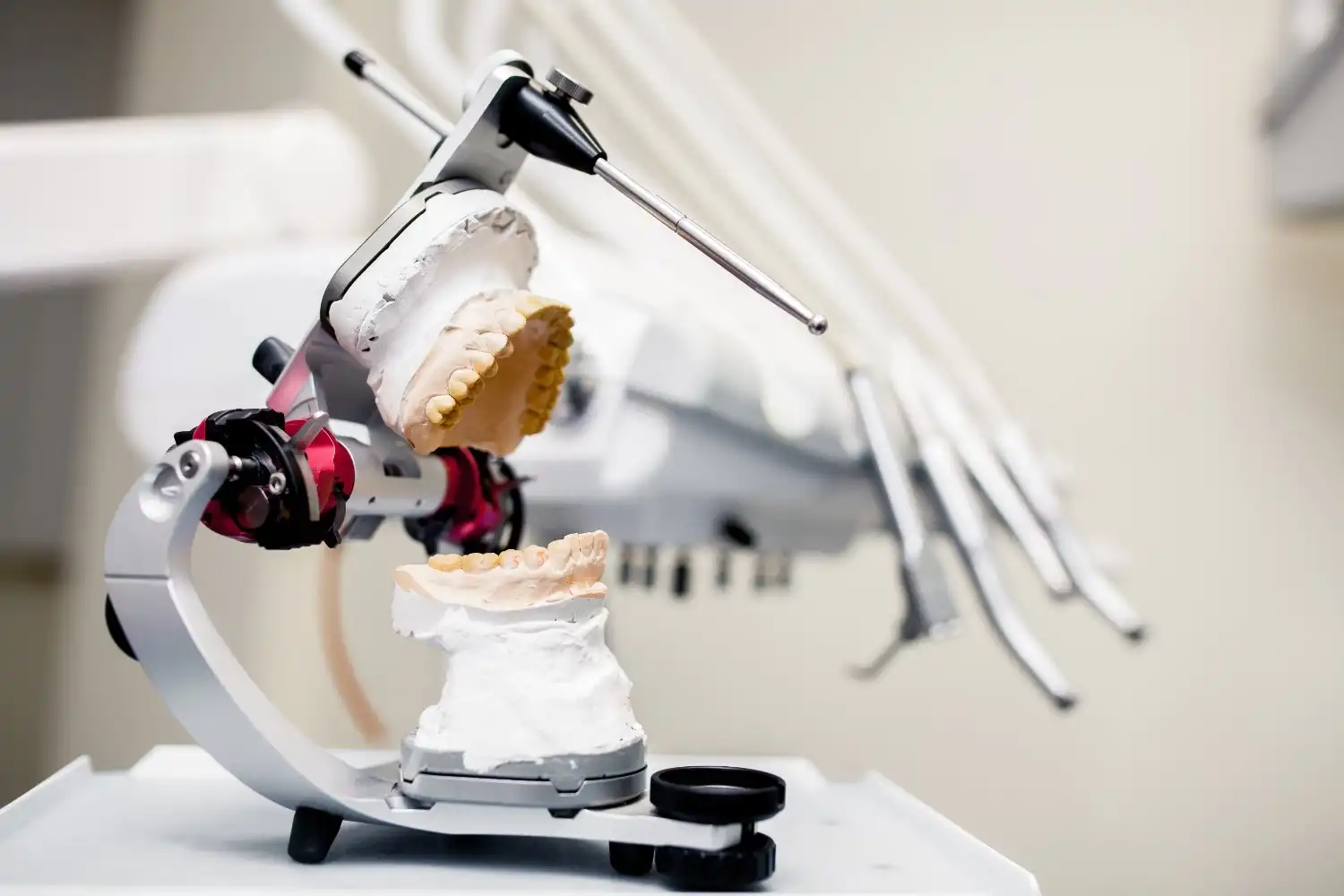
Full mouth rehabilitation is a comprehensive dental treatment that restores all teeth and supporting structures in your mouth. This advanced procedure combines multiple restorative techniques—including dental implants, crowns, bridges, and periodontal therapy—to address severe dental problems like missing teeth, extensive decay, or worn-down dentition. At Dentpro Dental in Noida, we use state-of-the-art technology and proven methods to rebuild both the function and appearance of your smile. Full mouth rehabilitation typically takes several months and is performed in carefully planned phases to ensure optimal healing and long-lasting results.
What is Full Mouth Rehabilitation?
Full mouth rehabilitation, also known as full mouth reconstruction, is a treatment approach that rebuilds or replaces every tooth in your mouth. This isn't just about fixing one or two problems—it's about creating a complete solution for patients facing multiple serious dental issues.
Think of it as a complete renovation of your oral health. Just as you wouldn't repair just one room in a house with structural problems throughout, full mouth rehabilitation addresses all dental concerns together in one coordinated plan.
The treatment combines restorative dentistry with aesthetic principles. We're not only restoring function so you can eat and speak properly, but also creating a beautiful, natural-looking smile that boosts your confidence.
Who Benefits From Full Mouth Rehabilitation?
You might be a candidate for full mouth rehabilitation if you're experiencing:
- Multiple missing teeth throughout your mouth
- Severely decayed or broken teeth that can't be saved with simple fillings
- Teeth worn down from years of grinding (bruxism)
- Failed dental work that needs replacement
- Advanced gum disease affecting multiple teeth
- Jaw pain or bite problems from misaligned teeth
- Congenital conditions affecting tooth development
- Dental trauma from accidents or injuries
Many patients come to us feeling frustrated after years of dental problems. They've often tried patchwork solutions—fixing one tooth here, another there—but the problems keep coming back. Full mouth rehabilitation breaks this cycle by addressing everything at once.
The Full Mouth Rehabilitation Process at Dentpro Dental
Our approach to full mouth rehabilitation follows a systematic, patient-centered process that ensures the best possible outcome.
Step 1: Comprehensive Diagnostic Evaluation
Your journey begins with a thorough examination. During your first visit, we:
- Review your complete medical and dental history
- Perform a detailed oral examination of teeth, gums, and soft tissues
- Take digital X-rays to assess bone levels and tooth roots
- Use CBCT (Cone Beam Computed Tomography) 3D scans to evaluate jaw structure and plan implant placement
- Capture intraoral digital scans for precise models of your teeth
- Photograph your smile from multiple angles
- Assess your bite and jaw alignment
This diagnostic phase is crucial. We need to understand not just what's visible, but what's happening beneath the surface. Modern imaging technology allows us to see things that were impossible to detect just a few years ago.
Step 2: Treatment Planning and Simulation
Once we've gathered all diagnostic information, our team—led by Dr. Krupali Kakkad (Orthodontist & Dentofacial Orthopedics specialist) and Dr. Vinay Arora (Prosthodontist & Implantologist)—analyzes your case in detail.
We use advanced digital planning software to:
- Map out each phase of treatment
- Simulate the final result so you can see your future smile
- Determine the optimal sequence of procedures
- Calculate healing times between phases
- Plan implant positions with surgical guides for precision
During this stage, we also discuss your goals and expectations. What matters most to you? Is it restoring function so you can eat your favorite foods again? Eliminating pain? Creating a smile you're proud to show? Your priorities guide our treatment plan.
Step 3: Personalized Treatment Design
No two cases are identical, so every treatment plan is customized. Your plan might include:
Foundational Treatments:
- Periodontal therapy to treat gum disease and create a healthy base
- Tooth extractions for teeth that cannot be saved
- Bone grafting to rebuild areas with insufficient bone for implants
- Sinus lifts when placing upper implants
Restorative Procedures:
- Dental implants to replace missing tooth roots
- Root canal therapy to save infected but salvageable teeth
- Dental crowns to restore damaged teeth
- Bridges to span gaps where teeth are missing
- Dentures (partial or full) when appropriate
Corrective Treatments:
- Orthodontics to align teeth for proper bite
- Bite adjustment (occlusal equilibration) to distribute forces evenly
- TMJ therapy if jaw joint problems exist
Aesthetic Enhancements:
- Veneers for front teeth
- Tooth-colored materials for natural appearance
- Gum contouring for balanced smile proportions
Step 4: Phased Treatment Execution
Full mouth rehabilitation unfolds in carefully sequenced phases. This phasing serves several important purposes:
- First, it allows tissues to heal properly between procedures. For example, after extracting teeth or placing implants, bone and gums need time to recover before we can place permanent restorations.
- Second, it makes treatment more manageable. Instead of one marathon procedure, you go through several shorter appointments spread over time.
- Third, it allows us to assess and adjust. We can see how your mouth responds to initial treatments and fine-tune later phases accordingly.
Typical Phase Sequence:
Phase 1 - Foundation (Weeks 1-6):
- Treat active gum disease
- Extract hopeless teeth
- Perform necessary root canals
- Place bone grafts if needed
Phase 2 - Replacement (Weeks 8-16):
- Place dental implants
- Begin orthodontic treatment if needed
- Fabricate and place temporary restorations
Phase 3 - Restoration (Months 4-8):
- Allow implants to integrate with bone
- Complete orthodontic alignment
- Take final impressions for permanent restorations
Phase 4 - Finalization (Months 6-10):
- Place permanent crowns, bridges, or implant-supported prosthetics
- Adjust bite for optimal comfort and function
- Polish and refine aesthetics
Throughout treatment, we may collaborate with specialists—periodontitis for complex gum procedures, oral surgeons for difficult extractions or implants, endodontists for challenging root canals. At Dentpro Dental, we coordinate all aspects of your care.
Step 5: Recovery and Long-Term Maintenance
After your final restorations are placed, your responsibility for success increases. We provide:
- Detailed home care instructions
- Custom oral hygiene tools if needed
- Regular follow-up appointments to monitor healing
- Adjustments to restorations as your mouth settles
- On-going maintenance schedule
Most patients adapt quickly to their new teeth. Any initial sensitivity or awkwardness typically resolves within a few weeks as you get used to your restored bite.
Restorative Dentistry Procedures Used in Full Mouth Rehabilitation
Let me explain the main treatments we use, what they do, and why they're important.
1. Dental Fillings
Fillings repair teeth damaged by decay or small fractures. We remove the decayed portion, clean the area thoroughly, and fill it with restorative material.
Materials we use:
- Composite resin (tooth-colored, bonds to tooth structure)
- Ceramic (highly durable and aesthetic)
- Glass ionomer (releases fluoride, good for root surfaces)
Fillings stop decay from spreading and preserve the remaining healthy tooth structure. They're often the first step in rebuilding a damaged mouth.
2. Dental Crowns
A crown is a tooth-shaped cap that covers a damaged tooth completely. Think of it as a protective shell that restores strength and appearance.
When crowns are necessary:
- After root canal treatment (teeth become brittle)
- For heavily filled teeth that need reinforcement
- To replace large portions of lost tooth structure
- To cover poorly shaped or severely discolored teeth
- As anchors for dental bridges
Crown materials:
- Porcelain (most natural-looking, ideal for front teeth)
- Zirconia (extremely strong, good for molars)
- Porcelain-fused-to-metal (combines strength and aesthetics)
- Gold alloys (very durable, used for back teeth)
3. Dental Bridges
Bridges replace one or more missing teeth by anchoring artificial teeth (pontics) to adjacent natural teeth or implants.
Types of bridges:
- Traditional bridge: Crowns on teeth on either side of the gap, with pontic(s) suspended between them
- Cantilever bridge: Supported by crown on only one side (used when there's only one adjacent tooth)
- Implant-supported bridge: Anchored to dental implants instead of natural teeth (preserves adjacent teeth)
Bridges restore chewing function, prevent remaining teeth from shifting, and maintain facial structure. They're an excellent solution when dental implants aren't suitable.
4. Dental Implants
Dental implants are titanium posts surgically placed into your jawbone. They function as artificial tooth roots, providing a stable foundation for replacement teeth.
The implant advantage:
- Preserves jawbone (stimulates bone like natural roots do)
- Doesn't require grinding down adjacent teeth
- Looks and feels like a natural tooth
- Can last a lifetime with proper care
- Superior stability for eating and speaking
What implants can support:
- Single crowns (replacing one tooth)
- Bridges (replacing multiple teeth)
- Dentures (stabilizing removable prosthetics)
- Full arch restorations (replacing all teeth on upper or lower jaw)
Dr. Vinay Arora, our implantologist, uses 3D-guided implant surgery. This technology allows us to place implants with millimeter precision in exactly the right position and angle for optimal long-term results.
5. Root Canal Therapy
When the pulp (nerve and blood vessels) inside a tooth becomes infected, you need root canal treatment to save it.
The procedure:
- Remove infected pulp tissue
- Clean and disinfect the canals inside the tooth root
- Fill canals with biocompatible material
- Seal the tooth
- Restore with a crown for protection
Root canals get a bad reputation, but modern techniques make them comfortable. More importantly, they preserve your natural tooth—always preferable to extraction when possible.
In full mouth rehabilitation, root canal therapy often saves teeth that will serve as anchors for bridges or standalone restorations.
6. Inlays and On lays
These are custom-made restorations for teeth with moderate damage—too much for a simple filling but not enough to require a full crown.
Inlay: Fits within the cusps (points) of a tooth, replacing the chewing surface between them
Onlay: Extends over one or more cusps, providing more coverage
Made in a dental laboratory from porcelain or composite resin, inlays and onlays are precisely crafted to fit your tooth. They preserve more natural tooth structure than crowns while providing excellent strength and aesthetics.
7. Periodontal (Gum) Therapy
Healthy gums are essential for successful full mouth rehabilitation. We can't build a lasting restoration on diseased gums any more than you can build a house on unstable ground.
Periodontal treatments include:
- Scaling and root planing (deep cleaning below gumline)
- Antibiotic therapy for stubborn infections
- Gum grafting to cover exposed roots
- Pocket reduction surgery for severe disease
- Laser therapy for less invasive treatment
Many patients are surprised to learn their gums need treatment first. But this foundational work is critical—it creates the healthy environment necessary for everything else to succeed.
Benefits of Full Mouth Rehabilitation
The advantages of comprehensive treatment extend far beyond a prettier smile.
1. Restored Oral Function
Perhaps the most immediate benefit is being able to eat, speak, and smile without difficulty or embarrassment.
Missing or damaged teeth force you to adjust how you chew. You favor one side of your mouth. You avoid certain foods. Over time, this uneven wear damages remaining teeth and strains jaw muscles.
Full mouth rehabilitation restores balanced function. When all your teeth work together properly:
- Chewing efficiency improves dramatically
- Bite forces distribute evenly across all teeth
- Speech clarity returns (teeth play a crucial role in forming certain sounds)
- Jaw muscles relax because they're no longer compensating
Patients tell us the joy of eating a crisp apple or a steak without worry is life-changing.
2. Enhanced Smile Aesthetics
Let's be honest—appearance matters. Your smile affects how you feel about yourself and how others perceive you.
Full mouth rehabilitation addresses aesthetic concerns comprehensively:
- Replaces missing teeth (eliminating gaps)
- Corrects tooth color and discoloration
- Improves tooth shape and proportion
- Aligns teeth for a harmonious smile
- Restores proper lip support (prevents sunken facial appearance)
- Creates symmetry and balance
The psychological impact is profound. Patients who've hidden their smile for years suddenly find themselves smiling freely in photos and social situations. This confidence boost affects every area of life.
3. Prevention of Future Dental Problems
One of the most valuable but underappreciated benefits is prevention.
When we address all problems together, we can identify and correct underlying causes:
- Bite problems: An uneven bite doesn't just cause tooth wear—it can lead to TMJ disorders, headaches, and tooth fractures. By establishing proper occlusion (bite alignment), we prevent these issues.
- Bone loss: Missing teeth cause the jawbone to deteriorate. Dental implants stop this process by stimulating bone, just as natural roots do.
- Shifting teeth: When a tooth is lost, adjacent teeth drift toward the gap and opposing teeth over-erupt. This creates bite problems and makes spaces harder to fill later. Replacing teeth promptly prevents this cascade.
- Decay and infection: By eliminating all decay and infection during rehabilitation, we give you a fresh start. There are no hidden time bombs waiting to cause problems.
- Gum disease progression: Treating periodontal disease thoroughly stops its destructive process, protecting both teeth and bone.
The comprehensive approach means you're not just fixing today's problems—you're preventing tomorrow's.
4. Improved Overall Oral Health
Full mouth rehabilitation creates optimal oral health. At completion, you have:
- No active decay or infection
- Healthy, disease-free gums
- Stable, functional teeth or implants
- Proper bite alignment
- Easy-to-maintain restorations
Good oral health has systemic benefits too. Research links periodontal disease to heart disease, diabetes complications, respiratory problems, and pregnancy complications. By achieving excellent oral health, you support your overall wellbeing. Modern technology makes these complex cases more predictable than ever. Digital planning, guided surgery, and CAD/CAM restorations mean fewer complications and better long-term outcomes.
5. Enhanced Quality of Life
The combined effect of restored function, improved appearance, better health, and eliminated pain significantly improves quality of life.
Consider the practical benefits:
- No more emergency dental visits
- Reduced long-term dental costs (comprehensive treatment is more economical than years of band-aid fixes)
- Time savings (all problems addressed together rather than piecemeal over decades)
- Nutritional improvements (ability to eat a varied, healthy diet)
And the personal benefits:
- Increased self-confidence
- Reduced anxiety about dental problems
- Freedom from chronic pain
- Improved social and professional interactions
Many patients describe full mouth rehabilitation as liberating. Years of dental anxiety, embarrassment, and discomfort finally end.
Why Choose Dentpro Dental for Full Mouth Rehabilitation in Noida
Choosing the right dental team for full mouth rehabilitation is crucial. This is complex treatment that requires expertise, experience, and state-of-the-art technology.
1. Expert Clinical Team
Dentpro Dental Studio is led by two highly qualified specialists:
- Dr. Krupali Kakkad specializes in Orthodontics and Dentofacial Orthopedics. Her expertise in tooth alignment and jaw relationships is essential for creating proper bite function in full mouth cases.
- Dr. Vinay Arora is a Prosthodontist and Implantologist—precisely the specialties needed for complex reconstruction. Prosthodontists are dental specialists who focus on replacing and restoring teeth. Combined with implant expertise, this makes him ideally suited for full mouth rehabilitation.
2. Advanced Dental Technology
Technology makes a huge difference in treatment precision, comfort, and outcomes. At Dentpro Dental, we invest in cutting-edge equipment:
- 3D CBCT Imaging: Provides detailed three-dimensional views of your jaw, teeth roots, sinuses, and nerves. Essential for safe, precise implant placement.
- Digital Intraoral Scanners: Replace messy impression material with fast, accurate digital scans. More comfortable for you, more precise for us.
- CAD/CAM Crown Fabrication: Computer-aided design and manufacturing creates crowns and other restorations with exceptional fit and aesthetics.
- 3D Printing: Allows us to create surgical guides, models, and temporary restorations quickly and accurately.
- Dental Lasers: Provide less invasive treatment for gum procedures with faster healing and less discomfort.
- Digital Smile Design: Software that lets you preview your results before treatment begins. We can show you what your smile will look like.
This technology isn't just impressive—it translates to better results. Digital precision means restorations fit better, last longer, and look more natural.
3. Personalized Patient-Centered Care
We understand that full mouth rehabilitation is a significant commitment—emotionally, physically, and financially. That's why we emphasize personalized care at every step.
From your first consultation:
- We listen carefully to your concerns and goals
- We explain everything in clear, understandable terms (no confusing dental jargon)
- We answer all your questions thoroughly
- We provide detailed cost estimates with no hidden fees
- We offer flexible payment options to make treatment accessible
Throughout treatment:
- You have direct access to your treating doctors
- We keep you informed about progress and next steps
- We're responsive to any concerns or complications
- We coordinate all aspects of care so you're not running between different offices
After treatment:
- We provide clear maintenance instructions
- We schedule regular follow-ups to monitor your results
- We're available if problems arise
- We build long-term relationships with our patients
4. Comfortable, Modern Environment
Dental anxiety is common, especially for patients who've had difficult experiences or need extensive treatment. We've designed our clinic in Sector 75, Noida, to be welcoming and comfortable.
Patient comfort features:
- Modern, clean treatment rooms with the latest equipment
- Gentle anaesthesia techniques for pain-free procedures
- Sedation options for anxious patients
- Entertainment options during longer procedures
- Relaxing atmosphere with friendly, professional staff
We want you to feel at ease from the moment you walk through our door.
5. Convenient Noida Location
Located in Sector 75, Noida, we're easily accessible for patients throughout the region. You don't need to travel to Delhi or other cities for world-class full mouth rehabilitation—expertise and technology are available right here in Noida.
What to Expect: Timeline and Recovery
Understanding the timeline helps you plan and sets realistic expectations.
1. Treatment Duration
Full mouth rehabilitation typically takes 6 to 12 months, though complex cases may require longer. The timeline depends on:
- Number and type of procedures needed
- Healing time for implants (3-6 months for Osseo integration)
- Whether orthodontics is needed (adds several months)
- Your body's healing capacity
- Number of phases in your treatment plan
We provide a detailed timeline during your treatment planning consultation.
2. Recovery between Phases
After each phase of treatment, you'll need recovery time. Here's what to expect:
After extractions or oral surgery:
- 1-2 weeks for initial healing
- Soft diet for several days
- Some swelling and discomfort (manageable with medication)
- Activity restrictions for a few days
After implant placement:
- 3-6 months for implants to integrate with bone
- Temporary restorations during healing
- Careful oral hygiene around surgical sites
- Gradual return to normal eating
After crown and bridge delivery:
- Immediate function, though slight adjustment period
- Minor sensitivity possible (usually resolves quickly)
- Learning to clean around new restorations
Pain management: We use effective local anesthesia during all procedures so you feel no pain during treatment. Afterward, any discomfort is typically manageable with over-the-counter pain relievers or prescribed medications for more extensive procedures.
3. Temporary Restorations
You won't spend months without teeth. We provide temporary crowns, bridges, or dentures so you can function and smile normally while your permanent restorations are being created or implants are healing.
These temporaries protect your teeth and give you a preview of your final result. They also help your mouth adjust to the new tooth positions and bite.
Cost Considerations and Investment Value
Full mouth rehabilitation is a significant investment. While costs vary based on your specific needs, it's helpful to understand what factors affect pricing and the value you receive.
1. Factors Affecting Cost
- Number of teeth requiring treatment
- Type of restorations needed (implants are more expensive than bridges; bridges are more expensive than dentures)
- Extent of foundational work (gum surgery, bone grafting, extractions)
- Materials chosen (zirconia vs. porcelain vs. metal)
- Need for specialist involvement
- Complexity of your case
During your consultation at Dentpro Dental, we provide a detailed, itemized estimate so you know exactly what to expect.
2. Long-Term Value
When evaluating cost, consider the long-term value:
- Compared to piecemeal treatment: Fixing problems one at a time over many years often costs more in total than comprehensive treatment upfront. Plus, you spend years with ongoing dental issues.
- Durability: Quality full mouth rehabilitation with proper care can last 15-25 years or longer. Implants, in particular, can last a lifetime.
- Prevention: By addressing all problems now, you avoid expensive emergency treatments, additional tooth loss, and compounding problems later.
- Quality of life: The benefits to your health, confidence, and daily comfort have real value that's hard to quantify but profoundly important.
3. Payment Options
We work with patients to make treatment financially accessible through:
- Flexible payment plans
- Financing options
- Insurance coordination (we help maximize your benefits)
Don't let cost concerns prevent you from exploring treatment. Many patients find full mouth rehabilitation more affordable than they expected once they understand the options.
Maintaining Your Results After Full Mouth Rehabilitation
Your new smile is an investment worth protecting. Proper maintenance ensures your results last for decades.
1. Daily Home Care
Brushing:
- Brush twice daily with fluoride toothpaste
- Use a soft-bristled brush (electric brushes are excellent)
- Spend at least two minutes per brushing session
- Don't scrub too hard (gentle is better)
- Replace your brush every 3-4 months
Flossing:
- Floss daily between all teeth
- Use floss threaders for bridges
- Consider water flossers for implants and hard-to-reach areas
- Be thorough but gentle around restorations
Additional tools:
- Interdental brushes for larger spaces
- Antibacterial mouth rinse if recommended
- Rubber tip stimulator for gum health
2. Professional Care
Regular dental visits:
- Professional cleaning every 6 months (more frequently if you have implants or history of gum disease)
- Comprehensive exams to catch problems early
- X-rays as needed to monitor bone levels and restorations
- Adjustments if bite feels off
Early detection of any issues means simpler, less expensive fixes.
3. Lifestyle Considerations
Protect your investment:
- Don't use teeth as tools (opening packages, biting nails, etc.)
- Wear a nightguard if you grind your teeth
- Avoid extremely hard foods (ice, hard candy, popcorn kernels)
- Quit tobacco (major risk factor for implant failure and gum disease)
- Limit sugary and acidic foods and drinks
Nutrition: A balanced diet supports oral health. Your restored dentition allows you to eat nutritious foods again—take advantage of this!
FAQS about Full Mouth Rehabilitation
1. How is full mouth rehabilitation different from getting dentures?
Full mouth rehabilitation is a comprehensive approach that might include dentures, but it's much broader. The goal is to restore optimal function and health using the best combination of treatments for your situation—which might be implants, crowns, bridges, or dentures. We preserve natural teeth whenever possible. Dentures alone are just one solution and may not address underlying problems like bone loss or gum disease.
2. Can I eat normally during treatment?
Yes, though with some modifications. We provide temporary restorations so you can function normally. After certain procedures like extractions or implant placement, you'll need a soft diet temporarily while healing. As treatment progresses, eating becomes increasingly comfortable.
3. Will my insurance cover full mouth rehabilitation?
Dental insurance typically covers portions of restorative treatment, though coverage varies widely. Most plans have annual maximum limits that won't cover the entire cost of full mouth rehabilitation. We help you understand your benefits and maximize your insurance coverage. Many patients use a combination of insurance benefits and payment plans.
4. How long do full mouth rehabilitation results last?
With proper care, results can last 15-25 years or much longer. Dental implants, in particular, can last a lifetime if well-maintained. The longevity depends on several factors: quality of your home care, regular professional maintenance, your general health, habits like smoking or grinding teeth, and the materials used. We use high-quality materials and proven techniques to maximize durability.
5. Is full mouth rehabilitation painful?
We use effective anesthesia during all procedures, so you won't feel pain during treatment. Afterward, some soreness, swelling, or discomfort is normal, but it's manageable with medication. Most patients find the discomfort much less than they feared. Many also tell us that the relief from finally fixing chronic dental problems far outweighs any temporary treatment discomfort.
6. Can I work during treatment?
Yes, most patients continue working throughout full mouth rehabilitation. We schedule procedures to minimize time away from work. Some patients take a day or two off after more extensive procedures, but others return to work the same day or next day. We discuss your schedule during planning to accommodate your needs.
7. What if I have dental anxiety?
We understand dental anxiety, especially for patients who need extensive treatment. We offer several approaches to help you feel comfortable: detailed explanations so you know what to expect, gentle techniques and effective anesthesia, sedation options for anxious patients, and the ability to take breaks during longer appointments. Many anxious patients tell us that our calm, patient-centered approach made treatment much easier than they expected.
 WhatsApp